


Last Updated on May 8, 2026: Reviewed by Prof. Dr. Coşkun Yıldız
Welcome to Guide of Subperiosteal Dental Implants in Turkey!
Extreme jawbone deterioration presents unique clinical hurdles. Standard titanium foundations require adequate bone depth for insertion. Severe atrophy makes this impossible. Subperiosteal dental implants in Turkey offer an extraordinary, custom-engineered solution. This advanced protocol utilizes a tailored titanium framework resting directly upon the bone, beneath the gums. It provides a permanent, highly secure base for fixed prosthetics. Individuals seeking dental implants in Turkey discover elite maxillofacial engineering alongside exceptional value. Choosing Turkey ensures world-class rehabilitation.
- Custom Framework: 3D-printed titanium structures matching precise jaw anatomy flawlessly.
- Surface Placement: Resting directly on the bone rather than penetrating inside it.
- Graft-Free Solution: Bypassing extensive bone rebuilding procedures completely.
- Rapid Restoration: Facilitating the swift attachment of a secure dental bridge.
What Are Subperiosteal Dental Implants in Turkey?
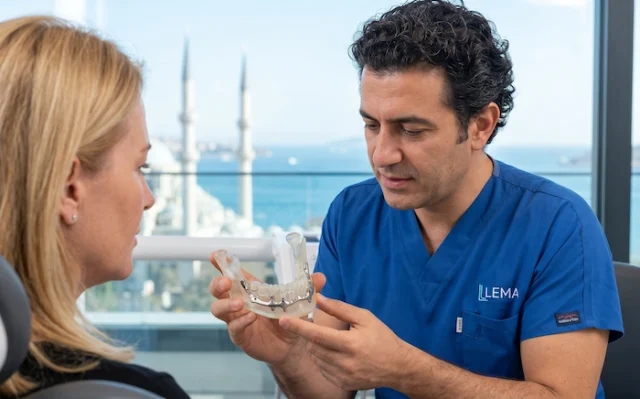
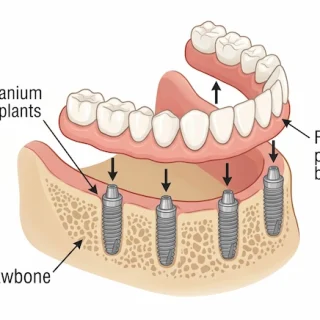
Standard endosteal foundations are inserted vertically into the jawbone. Subperiosteal placements utilize a completely different structural concept. Maxillofacial specialists design a custom metal framework. This lightweight titanium mesh rests securely on top of the residual jawbone, entirely covered by gum tissue. Small posts protrude through the gums to hold the final dental bridge. This creates immense stability for individuals lacking vertical bone height. Global patients frequently select dental implants in Turkey to access this highly specialized, custom-milled technology.
Ideal Candidates for Subperiosteal Restorations
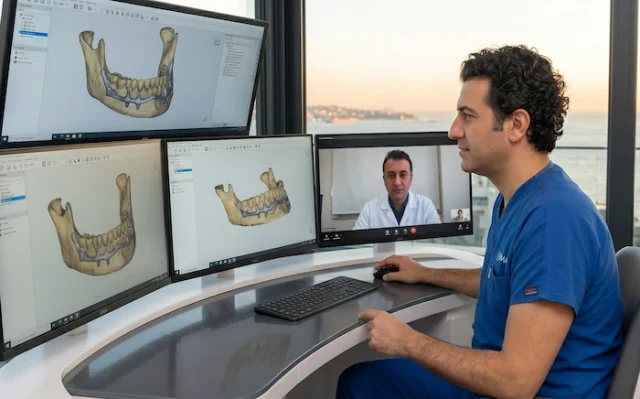
This protocol specifically targets individuals managing extreme mandibular or maxillary atrophy. It perfectly suits long-term denture wearers who possess practically no residual bone ridge. Sometimes, age or medical conditions render traditional bone grafting impossible. Subperiosteal structures provide the ultimate alternative. The comprehensive 3D diagnostics used for dental implants in Turkey determine this exact anatomical necessity flawlessly.
Major Benefits of the Subperiosteal Approach
- Avoiding Massive Grafts: Rebuilding a completely flat jawbone takes months. This framework bypasses that massive clinical requirement entirely.
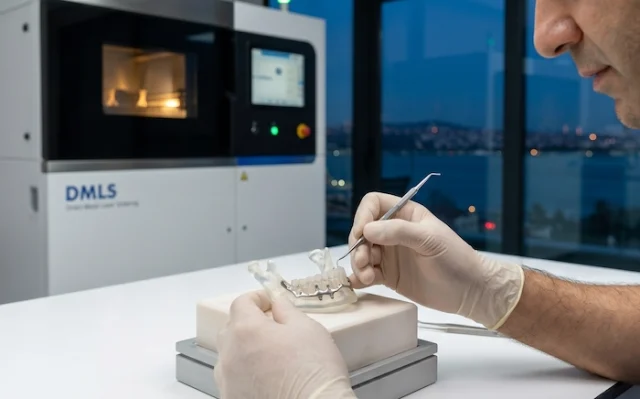
- Perfect Anatomical Fit: Advanced CAD/CAM technology creates a 100% customized titanium mesh. It hugs the unique contours of the remaining bone perfectly.
- Mandibular Focus: While zygomatic options exist for the upper jaw, subperiosteal frameworks excel at restoring severely resorbed lower jaws.
- Even Load Distribution: The framework spans a large surface area. This distributes chewing forces evenly across the entire jawbone.
Detailed Clinical Procedure and Recovery Breakdown
Precision dictates every single phase of this highly customized restoration.
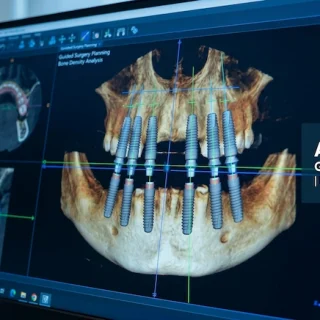
- Advanced 3D Mapping and Design. The initial step involves incredibly precise CBCT scanning. Specialists map the exact surface contours of the atrophied jaw. High-tech laboratories utilize this digital blueprint to 3D-print the bespoke titanium framework.
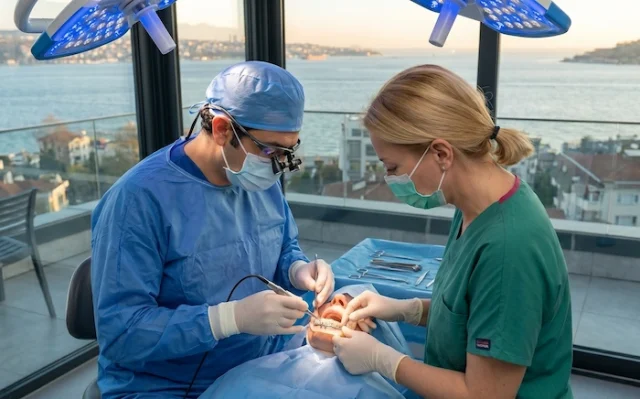
- Precision Framework Placement Clinical experts position the custom framework directly onto the bone surface. This occurs under general anesthesia or deep IV sedation. Gum tissue is carefully repositioned over the mesh, leaving only the tiny attachment posts visible.
- Healing and Prosthetic Attachment Gum tissues heal rapidly around the protruding posts over a few weeks. The framework integrates securely with the underlying bone contours. Specialists then attach the permanent, custom-crafted dental bridge.
The Cost Advantage of Subperiosteal Implants in Turkey
This protocol demands ultra-precise 3D printing and elite maxillofacial expertise. Naturally, it ranks among the most specialized dental treatments globally. Yet, securing subperiosteal dental implants in Turkey provides extraordinary financial advantages. Top-tier clinics deliver these highly customized frameworks at remarkably accessible rates. International patients receive premium titanium engineering and luxurious care. Strict medical safety protocols guarantee phenomenal clinical outcomes without exorbitant Western price tags.
Frequently Asked Questions About Subperiosteal Dental Implants in Turkey
Is the placement procedure for subperiosteal dental implants in Turkey painful?
Supreme comfort remains the top priority. The clinical placement occurs under deep IV sedation or general anesthesia. This ensures a completely painless, relaxing experience. Post-procedural swelling is normal. Prescribed medication manages this temporary discomfort effortlessly.
Do I need a bone graft for subperiosteal dental implants in Turkey?
No. This protocol represents the ultimate graft-free solution. It utilizes the existing bone surface geometry. Maxillofacial specialists design the custom framework to fit the current anatomy perfectly. This eliminates the need for complex, time-consuming bone rebuilding completely.
How long does it take to make the custom framework?
Elite clinics utilize rapid digital workflows. Following the initial 3D scan, advanced dental laboratories generally 3D-print the custom medical-grade titanium framework within a few days. This allows the clinical placement to proceed swiftly in Turkey.
Are subperiosteal dental implants in Turkey a permanent solution?
Yes. The medical-grade titanium framework establishes incredibly secure biomechanical stability. Once the gum tissue heals and tightens around the structure, it acts as a permanent foundation. It supports a lifelong fixed dental bridge effectively.

Prof. Dr. Coşkun Yıldız
Dentistry
Prof. Dr. Coşkun Yıldız, an internationally recognized and licensed dentist with distinguished expertise in implantology and cosmetic dentistry, has medically reviewed this article to ensure the highest standards of accuracy, reliability, and relevance. With decades of combined clinical and academic experience, Prof. Dr. Coşkun Yıldız delivers evidence-based, up-to-date insights that align with the latest global dental technologies, treatments, and best practices—empowering readers to make informed, confident decisions about their oral health and dental care.
Book an Appointment


6 comments
Marcus Vane
2026-05-08T09:02:53-03:00 at 9:02 AM
I was told I’m not a candidate for any type of implant because my jawbone is too thin. How does a subperiosteal implant stay in place if it doesn’t actually go deep into the bone?
Reviewed by Prof. Dr. Coşkun Yıldız
2026-05-08T09:33:09-03:00 at 9:33 AM
Subperiosteal implants are specifically engineered for patients with extreme bone resorption who cannot undergo traditional bone grafting. Unlike standard implants that are placed inside the bone, these are custom-designed frames that sit directly on top of the jawbone but beneath the gum tissue. They are held securely in place by the natural contours of your jaw and the overlying soft tissue, providing a stable foundation for a fixed bridge without needing vertical bone depth.
Modern partner specialists in Turkey use high-resolution 3D CT scans and CAD/CAM technology to create a titanium frame that fits your unique anatomy with sub-millimeter precision. This “custom-fit” approach ensures that the biting forces are distributed across a wider surface area of the existing bone, making it a highly effective “last resort” solution for patients who were previously told their cases were hopeless.
Elena Petrov
2026-05-08T10:04:35-03:00 at 10:04 AM
I’ve heard that subperiosteal implants are an old technique from the 1950s. Is the version they use in Turkey different, or is it still the same old-fashioned design?
Reviewed by Prof. Dr. Coşkun Yıldız
2026-05-08T10:16:40-03:00 at 10:16 AM
You are correct that the concept has been around for decades, but the technology used by partner clinics today is light-years ahead of the 1950s version. In the past, these frames were made from hand-taken impressions, which often led to fitment issues. Today, the “Individual Patient Solutions” (IPS) used in Turkey involve 3D-printed medical-grade titanium that is laser-sintered to perfectly match the digital map of your jaw.
This digital evolution has solved the complications of the past, such as infection or instability. By utilizing these 3D-printed frameworks, partner specialists can provide a fixed set of teeth even in cases where the bone is as thin as a wafer. It is essentially a fusion of vintage dental concepts with ultra-modern aerospace engineering, offering a predictable and long-term solution for complex dental rehabilitation.
Yusuf Arslan
2026-05-08T11:19:21-03:00 at 11:19 AM
If I choose this treatment in Turkey, is it considered a major surgery? I’m worried about the healing time since the whole frame sits under the gums.
Reviewed by Prof. Dr. Coşkun Yıldız
2026-05-08T11:32:44-03:00 at 11:32 AM
While the surgical placement of a subperiosteal frame is a specialized procedure, it is often considered less invasive than the multiple, months-long bone grafting surgeries that would otherwise be required. Because we are not drilling deep into the bone or performing sinus lifts, the localized trauma is often lower. The procedure is typically performed under sedation, and most patients experience manageable swelling that subsides within 7 to 10 days.
The recovery process is actually quite efficient because the frame is designed for immediate stability. This allows partner clinics to often fit a temporary fixed bridge very quickly after the surgery. Within a few weeks, the gum tissue heals over the custom titanium framework, and you can enjoy the functional benefits of fixed teeth while your final, permanent ceramic restoration is being meticulously crafted in the lab.